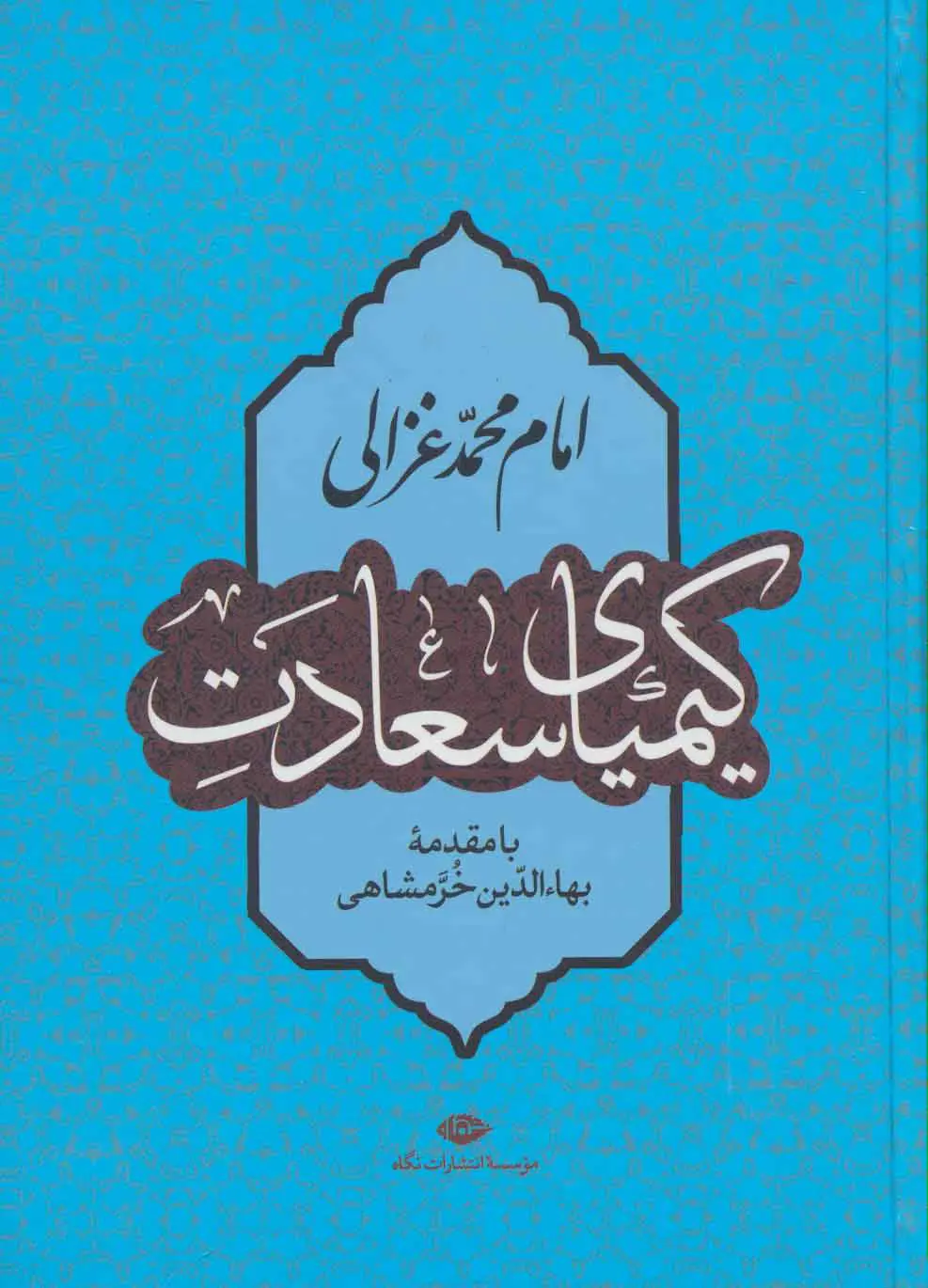



کیمیای سعادت (2 جلدی) الفارسية 1435
Kīmīyā-yi Saʻādat (2 jildī)
99٫60 $

مشاركة
Wishlist
ISBN رقم:
9789644451898
المحرر:
Ḥusayn Khadīv Jam
الناشر:
'Ilmi va Farhangi
عدد المجلدات:
2
الفئة العمرية:
البالغون
الصفحات:
1338
الوزن:
2300 g
أبعاد المنتج:
18 x 25 x 9٫97 cm
غلاف الكتاب:
غلاف کرتونی
“Kimiya-ye Sa‘adat (The Alchemy of Happiness)” by Imam Muhammad al-Ghazali is a major work on ethics, mysticism, and Islamic thought, written in Persian in the late fifth century AH. It is considered a Persian abridgment and adaptation of his monumental work Ihya’ ‘Ulum al-Din (The Revival of Religious Sciences). In this book, Ghazali examines the path toward human knowledge, spiritual refinement, and self-improvement through four fundamental themes: self-knowledge, knowledge of God, knowledge of the world, and knowledge of the Hereafter.
The structure of the book consists of four major sections, known as the “four quarters” (arba‘ rub‘): acts of worship, social and ethical conduct, destructive traits, and salvational virtues. Beyond explaining outward religious practices, Ghazali explores the inner meanings and philosophy of human actions, the principles of moral life, spiritual illnesses, and the ways toward achieving human perfection.
The prose of “Kimiya-ye Sa‘adat” is among the finest examples of classical Persian writing: fluent, eloquent, and rhythmic, conveying profound ethical and mystical concepts through stories, parables, and graceful explanations. The work remains one of the most influential Persian books on ethics and spirituality and has been translated into numerous languages.
Hossein Khadiv-Jam (1927–1986) was an Iranian writer, translator, researcher, and one of the most prominent contemporary scholars of Ghazali’s works. Born in Mashhad, he overcame a difficult childhood and youth through determination and pursued studies in Persian language and literature. After moving to Tehran, he conducted research and textual editing at the National Library and other cultural institutions, and received his PhD from the University of Beirut in 1965.
Khadiv-Jam devoted a significant part of his scholarly career to studying and introducing the works of Imam Muhammad al-Ghazali. His most important contributions include the critical editions of Ihya’ ‘Ulum al-Din and Kimiya-ye Sa‘adat, for which he compared and examined numerous manuscripts. His two-volume edition of Kimiya-ye Sa‘adat is regarded as one of the most authoritative editions of this classic work.
Among his other scholarly achievements are the critical editions of works such as Mafatih al-‘Ulum by al-Khwarizmi, Algebra and Al-Muqabala by al-Khwarizmi, Ihsa’ al-‘Ulum by al-Farabi, Masir-e Talebi, and Rawzat al-Khuld.
more
کیمیای سعادت اثر امام محمد غزالی، کتابی در اخلاق، عرفان و معارف اسلامی است که در اواخر قرن پنجم هجری به زبان فارسی نوشته شده و خلاصهای از کتاب بزرگ احیاء علومالدین به شمار میآید. غزالی در این اثر، مسیر شناخت و اصلاح انسان را در چهار محور اصلی خودشناسی، خداشناسی، دنیاشناسی و آخرتشناسی بررسی میکند.
ساختار کتاب شامل چهار بخش بزرگ یا «ربع» است: عبادات، معاملات، مهلکات و منجیات. غزالی در این بخشها، علاوه بر بیان احکام ظاهری، به معنا و فلسفه اعمال، آداب زندگی، بیماریهای اخلاقی و راههای رسیدن به کمال انسانی میپردازد.
نثر «کیمیای سعادت» از نمونههای برجسته نثر فارسی کلاسیک است؛ زبانی روان، فصیح و آهنگین که مفاهیم عمیق اخلاقی و عرفانی را با حکایت، تمثیل و بیانی دلنشین منتقل میکند. این اثر از مهمترین کتابهای اخلاقی و عرفانی فارسی است و بارها به زبانهای مختلف ترجمه شده است.
حسین خدیوجم (1306–1365) نویسنده، مترجم، پژوهشگر و از برجستهترین غزالیپژوهان معاصر ایران بود. او در مشهد زاده شد و پس از گذراندن سالهای دشوار کودکی و نوجوانی، با تلاش فراوان به تحصیل در رشته زبان و ادبیات فارسی پرداخت. پس از مهاجرت به تهران، در کتابخانه ملی و موسسات فرهنگی به پژوهش و تصحیح متون پرداخت و در سال 1344 دکترای خود را از دانشگاه بیروت دریافت کرد.
خدیوجم بخش مهمی از زندگی علمی خود را به شناخت و معرفی آثار امام محمد غزالی اختصاص داد. مهمترین کار او تصحیح و انتشار احیاء علومالدین و کیمیای سعادت غزالی بود که برای آنها نسخههای خطی متعدد را مقابله و بررسی کرد. تصحیح دو جلدی «کیمیای سعادت» او از معتبرترین چاپهای این اثر به شمار میرود.
از دیگر فعالیتهای علمی او میتوان به تصحیح آثاری چون مفاتیحالعلوم خوارزمی، جبر و مقابله خوارزمی، احصاءالعلوم فارابی، مسیر طالبی و روضهالخلد اشاره کرد.
more